Mornings are when stiffness does its best work: you've spent seven hours in roughly one position, and your back, hips and legs greet the day like rusted hinges. The fix doesn't require becoming a 5 a.m. person — it requires five gentle exercises that take less time than your coffee brews. Here's the wake-up routine.
Key Facts at a Glance
- Morning stiffness after sleep is normal: hours of stillness leave tissues feeling tight, and gentle movement is exactly what eases it.
- This routine uses five FlexBuddy exercises in wake-up order: Hamstrings Warm Up, Alternating Stretch, Basic Posture, Dynamic Rolling, and Relax The Neck.
- Mornings call for movement before holds: rhythmic, easy ranges first, gentle positions second — never aggressive stretching on a cold body.
- Practical holds: 10–30 seconds, repeated as comfortable, slow breathing throughout (ACSM guidelines). Sharp pain, tingling or numbness means ease off (NHS guidance).
- Total time: 5–7 minutes, done on the floor next to your bed if you like.
Why You Wake Up Stiff (and Why It's Fine)
Overnight, you barely move — and tissues that don't move for hours simply feel stiff when asked to work again. Add a mattress-shaped posture, and the first forward bend of the day understandably files a complaint. None of this means anything is wrong; it means your body wants a gentle on-ramp instead of a cold start.
The design rule for morning mobility is therefore different from evening stretching: movement first, depth never. Rhythmic, easy ranges wake tissues up; ambitious holds on a cold body just trigger guarding. Every exercise below respects that rule — and the FlexBuddy handles enforce it kindly, since depth always stays in your grip.
The routine at a glance
| Exercise | Targets | Time | Wake-up role |
|---|---|---|---|
| Hamstrings Warm Up | Hamstrings, lower back | 45 s | First movement of the day |
| Alternating Stretch | Legs, sides of torso | 45–60 s | Spreading the warmth |
| Basic Posture | Whole back | 30–45 s | Undoing the mattress shape |
| Dynamic Rolling | Spine, segment by segment | 30–45 s | Oiling the hinges |
| Relax The Neck | Neck, upper traps | 15–20 s per side | Releasing pillow tension |
1. Hamstrings Warm Up — the gentlest possible start
How to do it with FlexBuddy:
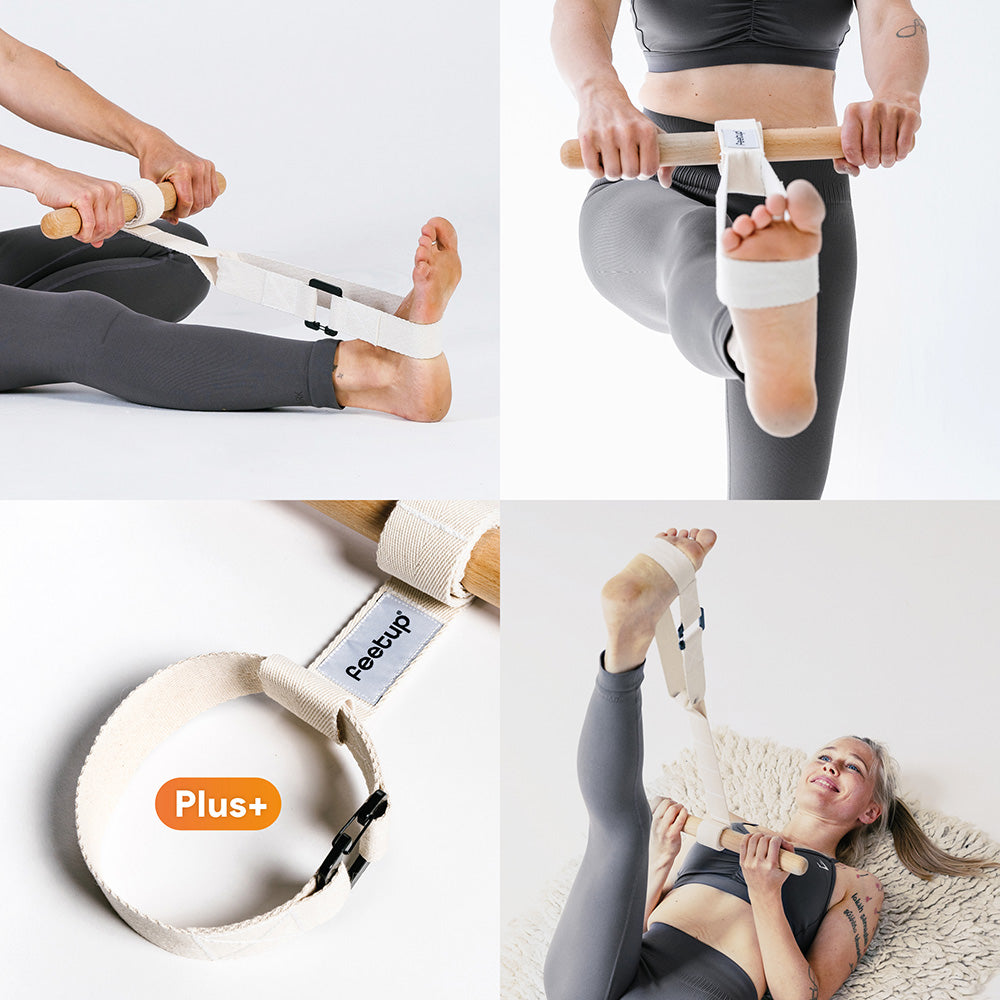
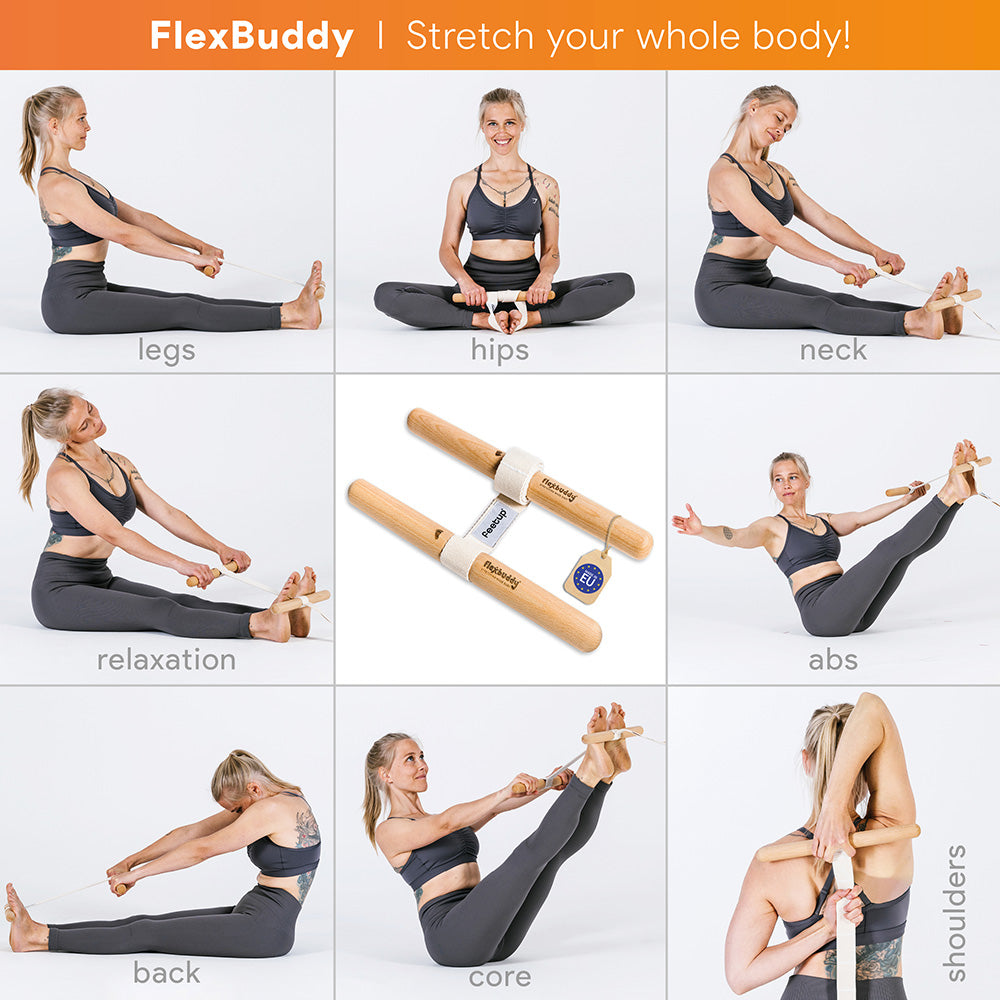
- Sit on the floor (or the edge of the bed rug), legs extended, FlexBuddy hooked around the soles of your feet.
- Hold the handles loosely, sit as tall as the morning allows.
- Rock gently forward and back in a tiny range — smaller than you think — for about 45 seconds.
What you should feel: a soft, moving pull behind the thighs that warms as you go. Morning version: even milder than usual.
Why it's first: rhythmic motion is the politest way to tell a sleepy nervous system the day has started.
2. Alternating Stretch
How to do it with FlexBuddy:
- Open the legs comfortably apart, hook FlexBuddy around one foot.
- Hinge gently toward that leg for a breath or two, rise, switch the tool to the other foot.
- Keep a slow, flowing left-right rhythm for 45–60 seconds.
What you should feel: the stretch traveling — each thigh in turn, sides of the torso opening as you alternate.
Why it works in the morning: alternating movement spreads warmth through both legs and the waist without parking anywhere long enough for a cold muscle to object.
3. Basic Posture
How to do it with FlexBuddy:
- Knees bent, tool hooked around both feet, arms long on the handles.
- Lean back slightly into the support, lift your chest, let the spine lengthen.
- Breathe for 30–45 seconds, shoulders soft.
What you should feel: the night's curled shape gently reversing — decompression, not effort.
Why mornings love it: it resets "tall" as the day's default before the desk gets a vote.
4. Dynamic Rolling
How to do it with FlexBuddy:
- From Basic Posture, keep light tension on the handles.
- Exhale and slowly round backward, rolling down vertebra by vertebra; inhale and roll back up.
- 3–5 unhurried cycles — one full breath per cycle, minimum.
What you should feel: segment-by-segment articulation; the spine going from "plank of wood" to "chain of links."
Common mistake: morning haste. If you're rushing this one, skip it and keep the others slow instead.
5. Relax The Neck
How to do it with FlexBuddy:
- Anchor the tool under your feet, hold one handle to gently weigh down that shoulder.
- Tilt your head slowly to the opposite side until a soft stretch appears.
- 15–20 seconds per side, slow breath.
What you should feel: whatever the pillow did last night, easing.
Why it's the closer: you stand up feeling lighter exactly where mornings feel heaviest.
Making It a Real Morning Habit
Put FlexBuddy where your feet land — literally next to the bed or by the kettle. Attach the routine to something that already happens: coffee brewing is the classic anchor, since five minutes is almost exactly one pot. And honor the bad-morning rule: one exercise still counts. The streak is the asset, not the session length.
If your day continues at a desk, the natural sequel is the sitting-all-day routine — and for time-crunched days, the two-minute version keeps the chain alive.
Make Stretching Easier With the Right Support
Morning is when willpower is at its thinnest — which is exactly why the routine has to be comfortable. FlexBuddy removes the morning obstacles: no reaching for toes you can't find before coffee, no wobbling, depth always controlled by your grip. The routine becomes something you do half-awake, which is the point.
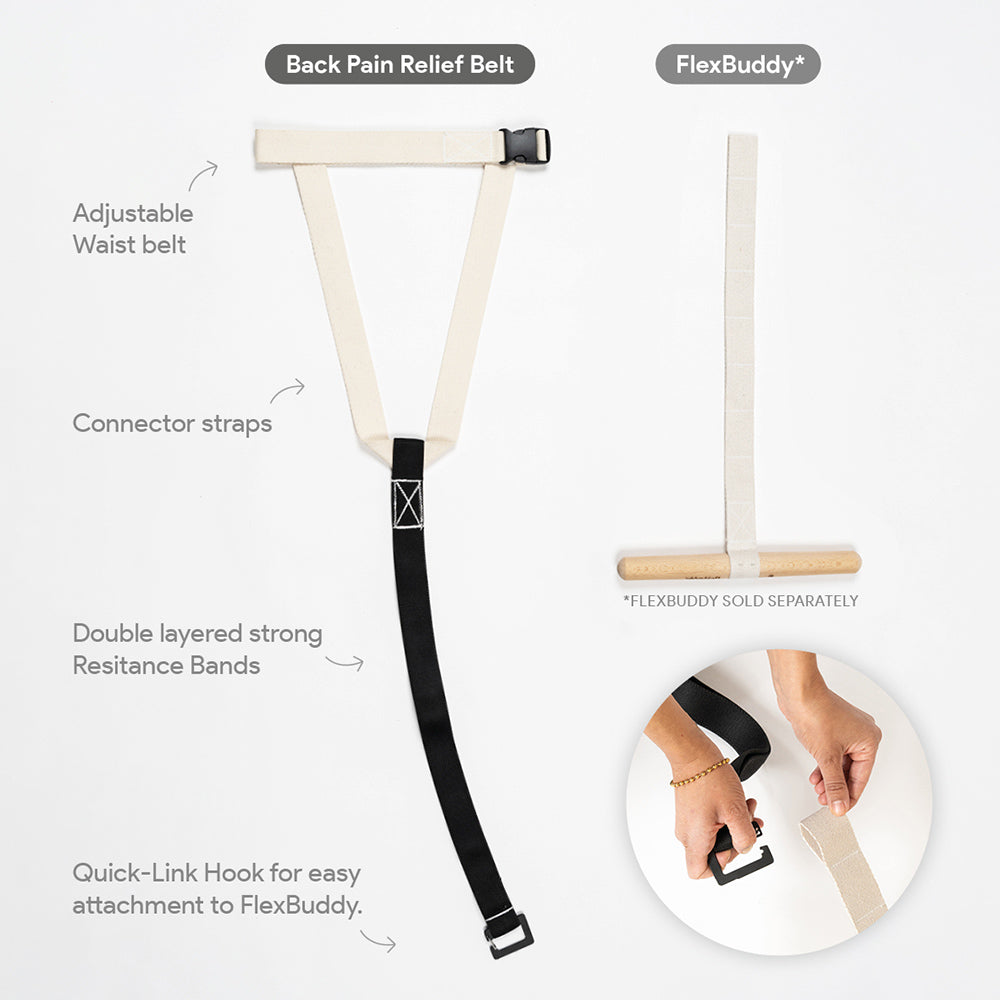
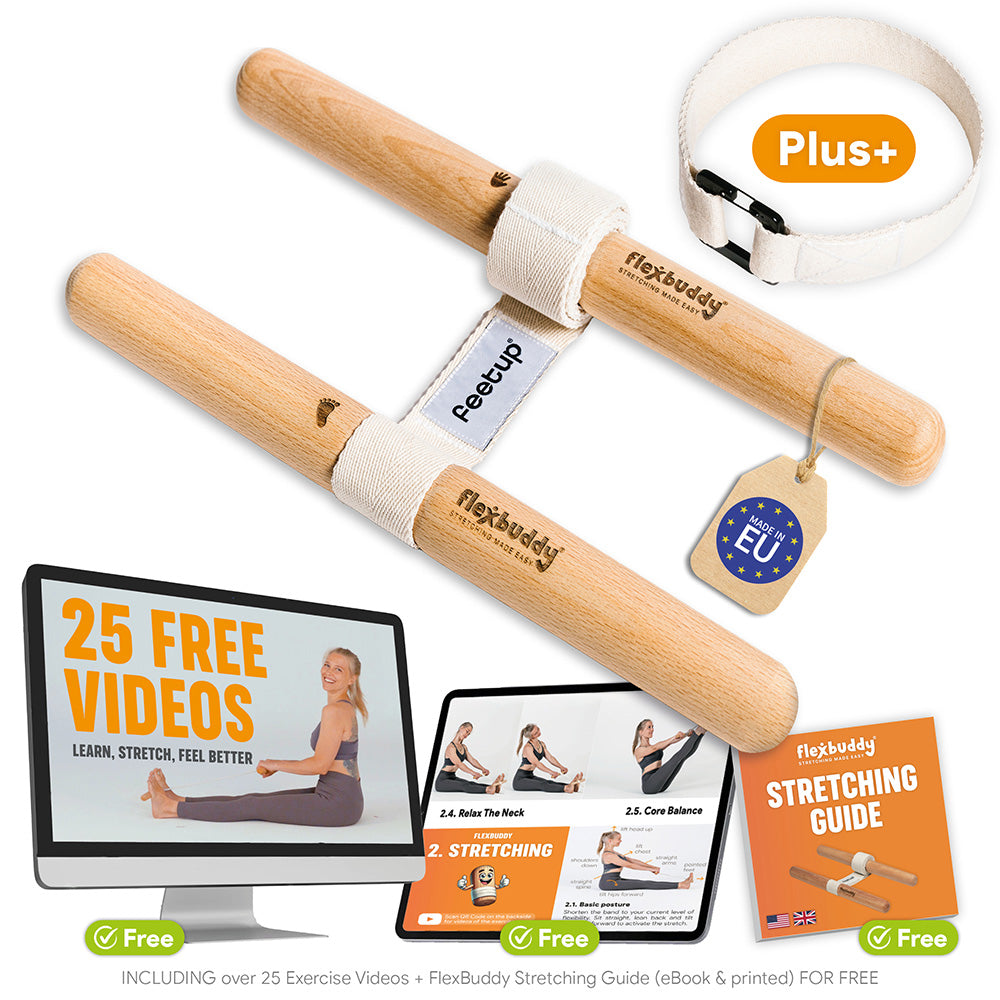
About the product: FlexBuddy is a compact stretching and mobility support tool made by WoodBros SRL, the European team behind the FeetUp yoga trainer. It is sold directly at flexbuddy.com, and the lineup includes the FlexBuddy Classic, the FlexBuddy Plus, and a digital Video Course Package with twelve guided routines.
Want a follow-along to keep mornings on rails? The FlexBuddy Video Course Package includes a Quick Daily Stretch routine that fits the morning slot perfectly.
Tomorrow morning could feel different — get your FlexBuddy here and put it next to the bed tonight.
Frequently Asked Questions
Is it bad to stretch right after waking up?
Gentle, rhythmic movement is fine and usually feels great — the thing to avoid is aggressive deep holds on a cold body. This routine is built movement-first for exactly that reason.
How long should a morning mobility routine be?
Five to seven minutes covers all five exercises. On rushed mornings, one or two exercises still earn the win.
Morning or evening — when is stretching better?
Whichever happens consistently. Morning sessions ease the wake-up stiffness; evening sessions unload the day. Many people eventually do a short version of both.
Is there a guided version of this routine?
Yes — the Video Course Package includes Quick Daily Stretch among its twelve follow-along sessions.