When your lower back feels stiff and tired, the instinct is either to do nothing (and stay stiff) or to attack it with aggressive stretching (and feel worse tomorrow). There's a calmer middle path: a few gentle, supported movements that may help ease everyday lower back stiffness in minutes — done at home, on a mat, no heroics required.
First, an important line: this routine is for the common, everyday kind of stiff and achy — the one that builds up from sitting, standing, or an ambitious weekend. If you have sharp pain, numbness, tingling, pain radiating down a leg, or pain that isn't improving, see a health professional first. Stretching is not a substitute for getting checked.
Key Facts at a Glance
- Everyday lower back stiffness often comes less from the back itself and more from what surrounds it: tight hamstrings, locked hips, and a mid-back that's stopped rotating.
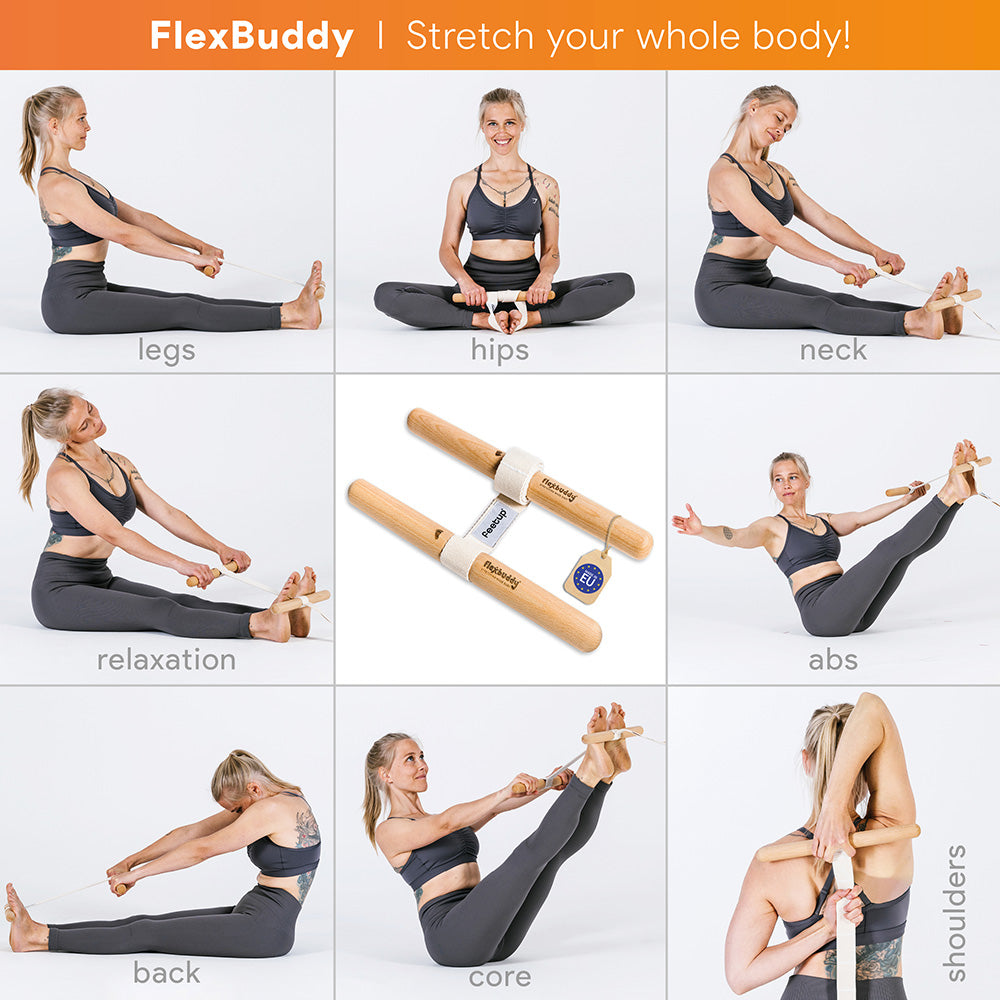
- The four FlexBuddy exercises here — Basic Posture, Dynamic Rolling, Spinal Twist, and Static Stretch — work the back gently and unload it by freeing its neighbors.
- Gentle movement is generally encouraged over bed rest for everyday back stiffness (NHS guidance) — mild, comfortable range, never forced.
- Practical hold times: 10–30 seconds per position (or slow controlled reps), repeated 2–4 times, with relaxed breathing (ACSM guidelines).
- This whole routine takes 5–8 minutes. Done daily, that's usually more useful than a long session once a week.
Why Your Lower Back Feels Like This
The lower back is the diplomatic middle child of your body: when the hips below or the mid-back above stop doing their jobs, the lumbar spine compromises on behalf of everyone. Sitting keeps your hips flexed and your hamstrings short, so when you bend, the pelvis can't rotate freely and the lower back rounds extra to compensate. Meanwhile the thoracic spine — built to rotate — goes quiet after years of facing a screen, so twisting and reaching also get billed to the lumbar area.
Add long hours in one position, which simply leaves tissues feeling stiff and under-moved, and you get the familiar end-of-day result: a back that feels older than you are.
The routine below addresses this honestly — not by "fixing" your spine, but by gently moving it through comfortable ranges and freeing the hips and mid-back so the lower back can stop overworking.
The routine at a glance
| Exercise | Targets | Time | Best for |
|---|---|---|---|
| Basic Posture | Whole back, posture | 30–60 s | Decompression, easing in |
| Dynamic Rolling | Spine, segment by segment | 6–10 slow reps | A back that feels "stuck" |
| Spinal Twist | Mid-back rotation | 3–5 breaths per side | Unloading the lumbar area |
| Static Stretch | Hamstrings | 20–40 s | Freeing the pelvis from below |
1. Basic Posture
Start here — it's the gentlest thing on this list and it feels good immediately.
How to do it with FlexBuddy:
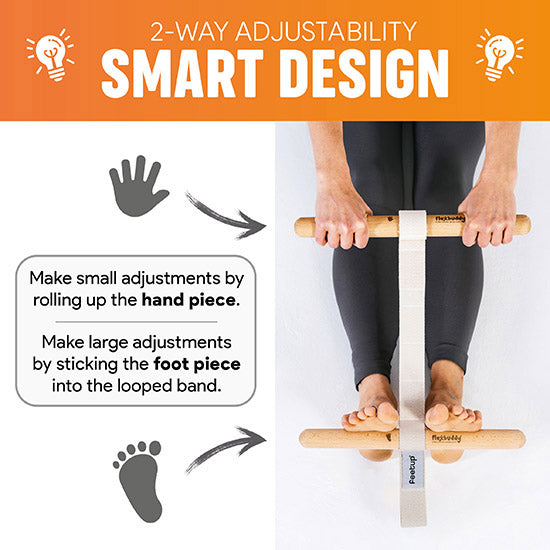
- Sit on the floor, knees bent, and hook FlexBuddy around both feet.
- Hold the handles and let your arms straighten so the tool takes some of your weight.
- Lean back slightly into the support, lift your chest, and let your spine find its natural length.
- Breathe here for 30–60 seconds, shoulders soft.
What you should feel: decompression rather than stretch — a tall, supported, unclenching feeling through the whole back.
Why it helps: after hours folded into one shape, the back's first need isn't intensity — it's a safe, supported position where the muscles can stop bracing. The counter-tension through the handles lets you lengthen without effort.
Beginner tip: if your back is having a cranky day, you're allowed to do only this exercise and call it a session.
2. Dynamic Rolling
The "oil the hinges" exercise — slow, controlled movement through the spine, one segment at a time.
How to do it with FlexBuddy:
- From the Basic Posture position, keep light tension on the handles.
- Exhale and slowly round your spine backward, rolling down vertebra by vertebra, letting the tool control the descent.
- Inhale and roll back up the same way — smooth, unhurried, no momentum.
- Repeat 6–10 slow cycles.
What you should feel: gentle articulation along the spine — movement, warmth, a sense of "unsticking." Nothing sharp at any single point.
Why it helps: stiff backs respond well to slow, controlled motion through comfortable ranges — it's movement, not force, that tends to ease that locked-up feeling. The handles are what make this controlled: you're never falling backward, just lowering and rising by choice.
Common mistake: speeding up. If a rep takes less than a full breath, it's too fast.
3. Spinal Twist
How to do it with FlexBuddy:
- Seated with FlexBuddy hooked around your feet, hold both handles in one hand.
- Inhale to sit tall, exhale and rotate your torso to the free side, other hand on the floor behind you.
- Turn from the ribcage, keep both sit bones grounded.
- Hold 3–5 slow breaths per side.
What you should feel: rotation through the mid-back, a light opening across the chest — and importantly, no cranking sensation in the lower back.
Why it helps: when the thoracic spine rotates properly, the lumbar spine gets to retire from a job it's bad at. Restoring mid-back rotation is one of the most direct ways to take daily load off the lower back.
Beginner tip: think "tall, then turn." Height first, rotation second — never trade one for the other.
4. Static Stretch
How to do it with FlexBuddy:
- Extend both legs, FlexBuddy hooked around your feet, handles in hand.
- Inhale and lengthen your spine; exhale and hinge forward from the hips.
- Stop at mild tension in the hamstrings — not the back — and stay 20–40 seconds, breathing slowly.
What you should feel: the stretch along the back of the thighs. If your lower back is what's talking, you've rounded: rise a little, re-lengthen, try a smaller hinge.
Why it helps: tight hamstrings restrict the pelvis, and a restricted pelvis sends its workload upstairs. Freeing the hamstrings is back care by proxy — we wrote a whole guide on the hamstring–lower back connection if you want the mechanics.
Common mistake: treating this as a toe-touching contest. The handles exist so you don't have to reach — use them.
Building the Habit (the Part That Actually Matters)
This routine works through repetition, not intensity. Anchor it: after you close the laptop, before your shower, during the kettle. Keep FlexBuddy visible. And on bad days, shrink the session rather than skipping it — one minute of Basic Posture maintains the habit, and the habit is the asset.
Desk job? The companion piece to this routine is our stretching guide for people who sit all day, which adds the neck, shoulders, and hips.
Make Stretching Easier With the Right Support
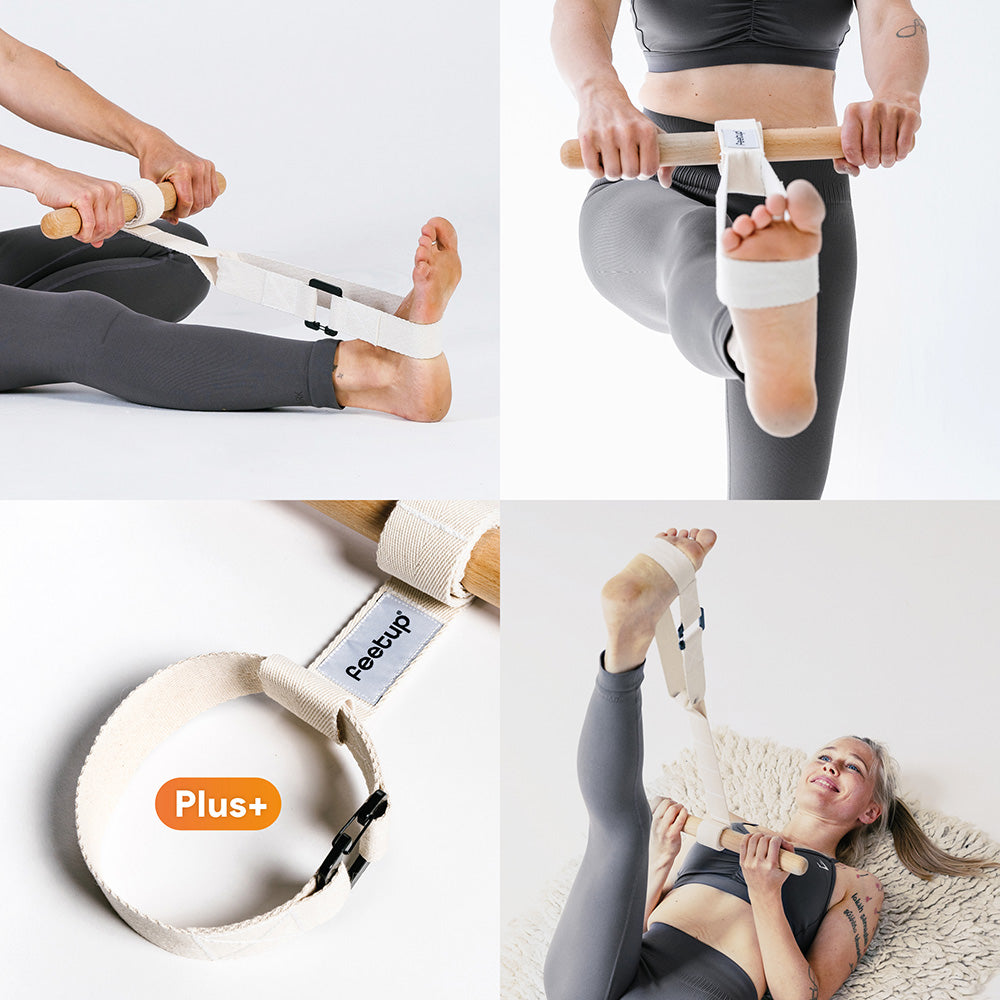
When your back already feels fragile, unsupported stretching can feel risky — so most people simply don't do it. FlexBuddy changes the experience: every position is supported, every depth is chosen by you, and backing off is as easy as relaxing your grip. That sense of control is exactly what lets a tense back actually release.
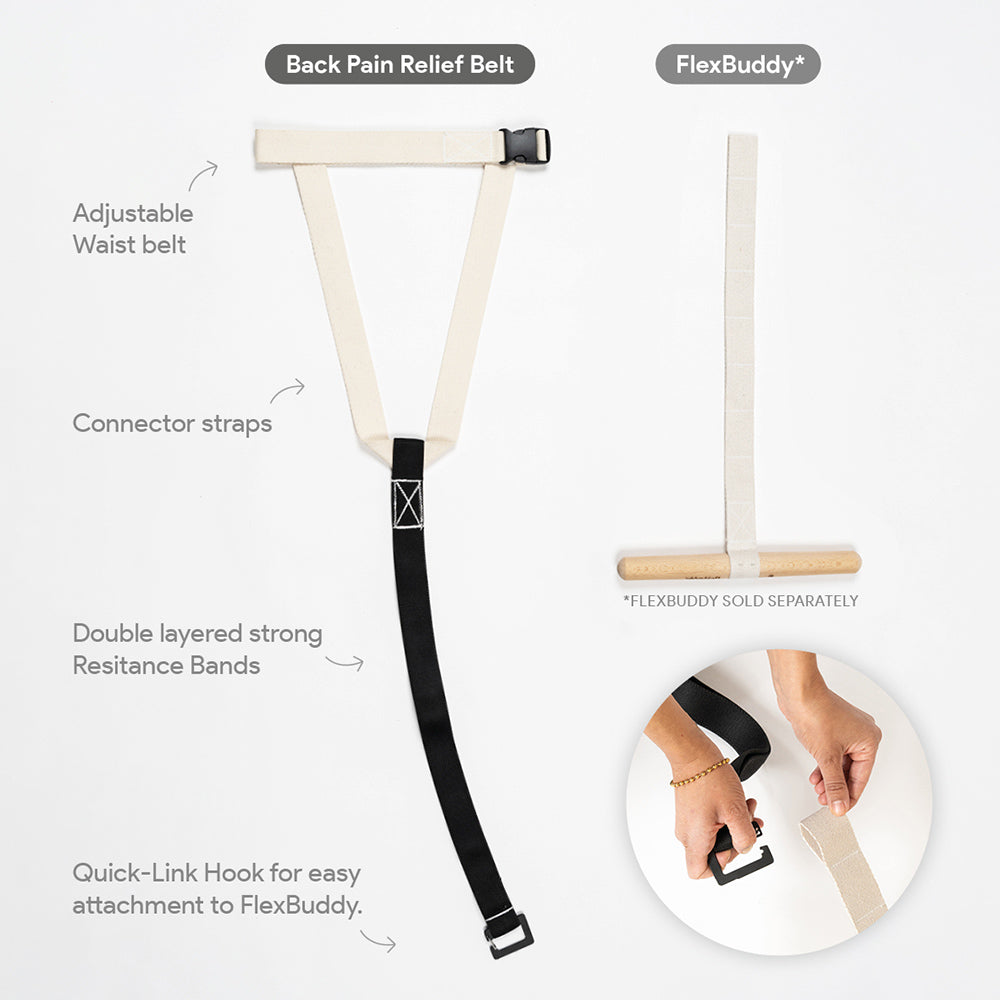
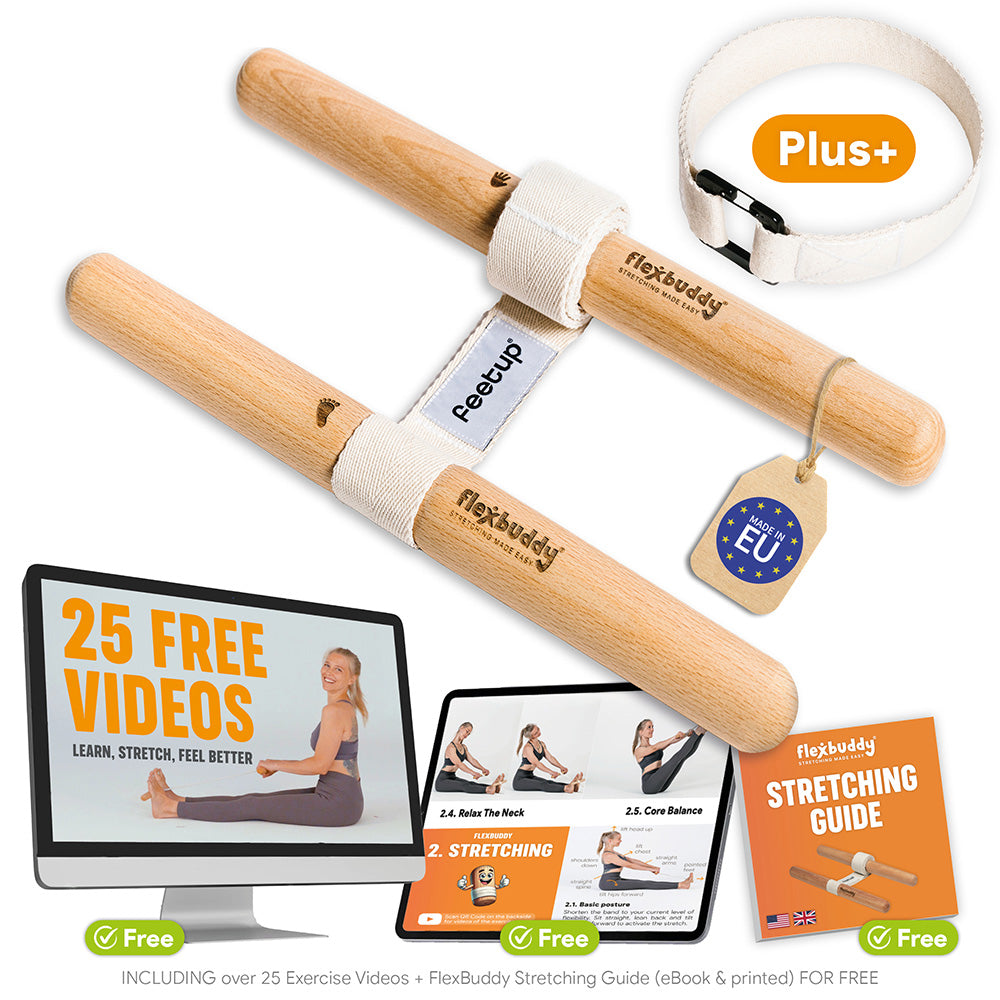
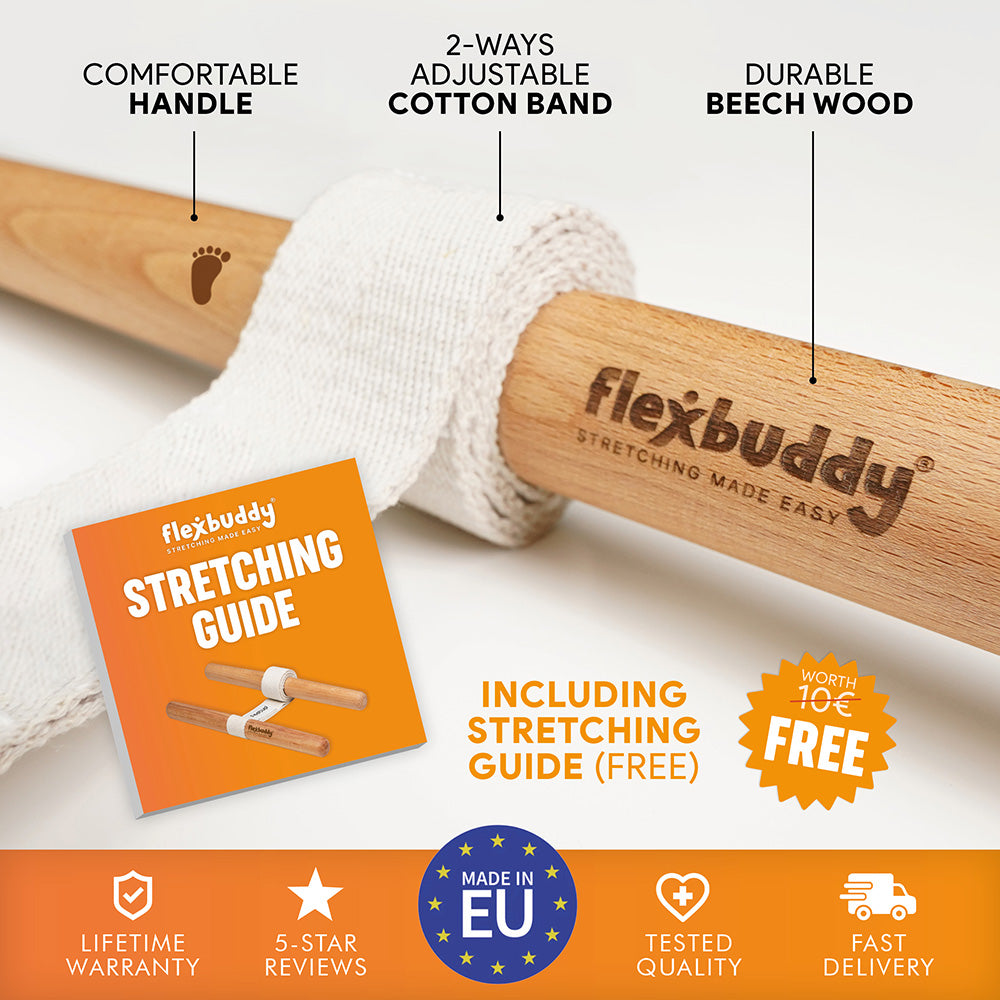
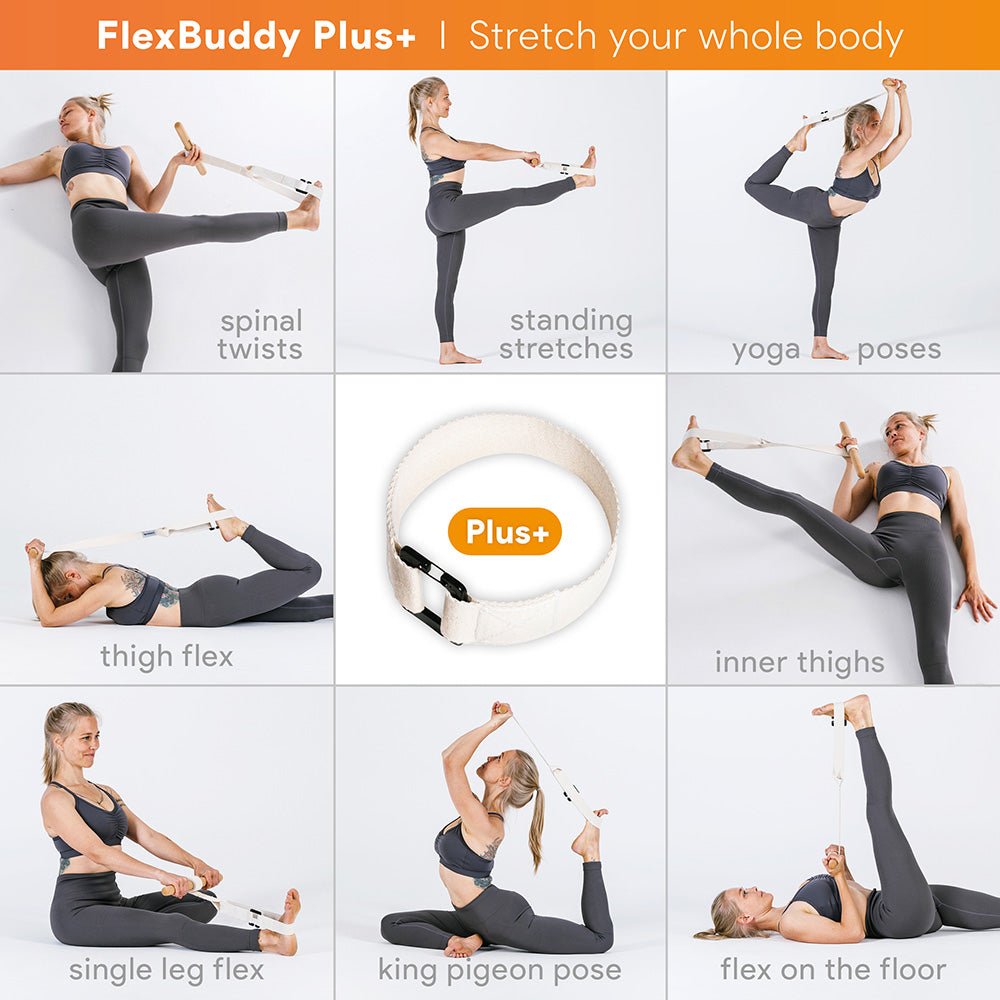
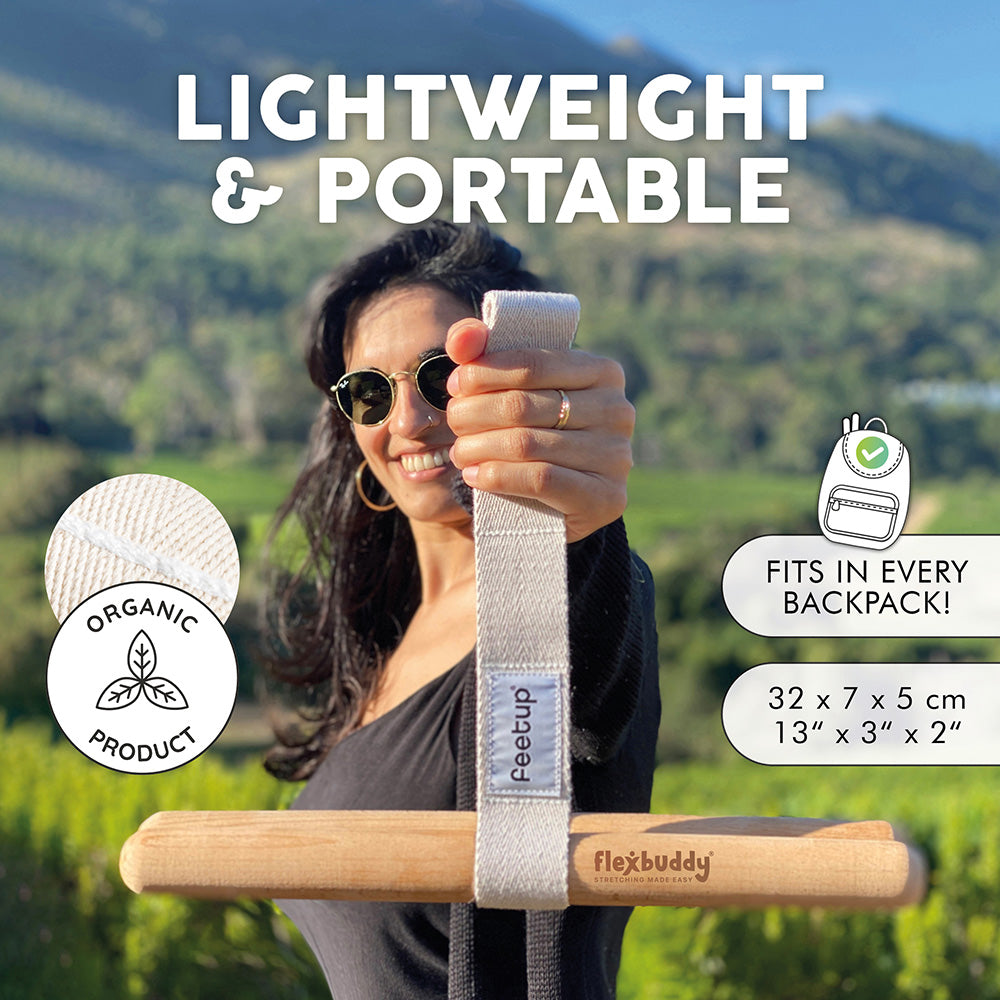
About the product: FlexBuddy is a compact stretching and mobility support tool made by WoodBros SRL, the European team behind the FeetUp yoga trainer. It is sold directly at flexbuddy.com, and the lineup includes the FlexBuddy Classic, the FlexBuddy Plus, and a digital Video Course Package with twelve guided routines.
If you'd rather follow along than read, the FlexBuddy Video Course Package includes a dedicated Relief for Back Pain routine plus eleven more guided sessions — press play and follow along.
Give your back a few supported minutes a day — get your FlexBuddy here.
Frequently Asked Questions
How often should I do this routine?
Daily or near-daily, in short sessions. Gentle, frequent movement generally helps everyday back stiffness more than occasional long sessions.
Should I stretch if my back hurts right now?
For everyday stiffness, gentle movement in comfortable ranges is generally encouraged. But sharp pain, numbness, tingling, pain radiating down a leg, or pain that isn't improving means see a health professional before stretching.
Can these stretches cure my back pain?
No stretch or tool can promise that, and you should be wary of anything that does. What a consistent gentle routine can do is help reduce everyday stiffness, support better mobility, and make your back feel less locked-up.
Is there a guided version of this routine?
Yes — the Video Course Package includes a Relief for Back Pain session among its twelve follow-along routines.
Why do these exercises target my hamstrings and mid-back if my lower back is the problem?
Because the lower back often overworks to compensate for stiff hips and a non-rotating mid-back. Freeing the neighbors reduces the lumbar workload — that's usually where the relief comes from.