- A herniated disc is common and usually self-limiting: the soft centre of a disc pushes through its outer ring and irritates a nerve. Most settle with time, gentle movement and painkillers [1][2]; across 11 studies, about two thirds shrank on their own on follow-up scans [3].
- Some symptoms are emergencies. Numbness around the bottom or genitals, trouble peeing or controlling your bladder or bowels, or losing feeling in a leg means 999 or A&E now, not a stretch [1].
- You can usually stretch with a herniated disc if it is gentle, keeps the spine long, and never sends symptoms further down the leg. Staying active helps; bed rest does not [1][4].
- A disc dislikes loaded bending: pressure inside a lumbar disc roughly doubles when you bend forward from standing, and is more than four times higher lifting 20 kg with a rounded back [5].
- Which direction helps is individual; for most people extension eases leg pain, but not all [6]. A physiotherapist's assessment beats any list on the internet.
- FlexBuddy® comes last: gentle hamstring work with a long spine, only once a clinician has cleared you and the leg stays quiet.
First, the honest answer
If you have just been told you have a herniated disc, you have probably read both that stretching will fix it and that it will make it worse. Both are wrong as blanket statements. Stretching is one small part of what helps a disc settle, and only a specific kind: unloaded, gentle, with the lower back held long rather than rounded; the folding-forward, pull-until-it-burns kind loads the very structure that is irritated. This article separates the two and sets out what physiotherapy-led practice generally considers safe, what to skip, and when the plan should be a clinician's rather than yours. Read the next section first.
Stop and get help now if you have any of these
A large herniation can press on the bundle of nerves at the bottom of the spinal canal, the cauda equina, which controls the bladder, bowel and the skin between the legs. It is rare, and the consensus among specialists is that it is an absolute indication for immediate surgery [7]. The NHS advice for a slipped disc is to call 999 or go to A&E if you have back pain and [1]:
- numbness around your bottom or genitals;
- you cannot pee, or cannot control when you pee or poo;
- you lose feeling in one or both legs;
- the pain started after a serious accident, such as a car accident.
The NHS back-pain page adds pain, tingling, weakness or numbness in both legs, and changes in how your penis or vagina feels during sex [8]. Ask for an urgent GP appointment or call 111 if you feel hot, cold, shivery or generally unwell with the pain, or if it is severe and started suddenly or is getting worse quickly [8]. See a GP if painkillers are not helping, the pain is not better after a few weeks, or it is worse at night [1]. Weakness that is getting worse, a dragging foot or spreading numbness means going back this week [1].
What a herniated disc is, in plain words
Between each pair of vertebrae sits a disc: a tough, flexible outer ring, the annulus fibrosus, around a soft, jelly-like centre, the nucleus pulposus [2]. A herniation happens when the soft centre pushes through the outer ring [2]. The escaped material can press on a nerve root, and it releases chemical irritants that inflame the nerve [2]. A bulge is the disc spreading beyond its edge without breaking through; a herniation proper is a protrusion (centre still contained), an extrusion (through the ring) or a sequestration (a loose fragment).
Why L4/L5 and L5/S1 come up so often
Most lumbar herniations happen at the two lowest levels, between the fourth and fifth lumbar vertebrae (L4/L5) and between the fifth lumbar vertebra and the sacrum (L5/S1) [9]. The nerve roots leaving here form the sciatic nerve, so a herniation here typically produces sciatica: a sharp, often shooting pain from the buttock down one leg, sometimes with numbness, tingling or weakness in the leg or foot [2]. About 90% of sciatica is caused by a herniated disc pressing on a nerve root [7]. Herniations are most common between 30 and 50, and twice as common in men [10].
Why most settle on their own
First, disc changes on a scan are normal with age. A 2015 systematic review of 33 imaging studies covering 3,110 people with no back pain found a disc bulge in 30% of 20-year-olds and 84% of 80-year-olds, and a protrusion in 29% and 43% respectively; the authors concluded that many such findings are part of normal ageing [11].
Second, herniations shrink. A 2017 meta-analysis of 11 cohort studies found that about 67% of lumbar herniations showed spontaneous resorption on repeat imaging after conservative treatment [3]; the chance runs from 96% for sequestrations and 70% for extrusions down to 41% for protrusions and 13% for bulges [12], so the dramatic-sounding ones resolve more often. The NHS says a slipped disc "usually gets better slowly with rest, gentle exercise and painkillers" [1]; Cleveland Clinic puts recovery without surgery at 9 out of 10 people [13].
Can you stretch with a herniated disc?
Usually, yes, for the same reason you should not lie still. The NHS advice is that you may need to rest at first if the pain is very bad, but you will get better more quickly if you gradually start gentle exercise, and the type is not important as long as it does not cause pain or make the back pain worse [1]. For sciatica, a Cochrane review of 11 trials found little or no difference between bed rest and advice to stay active, and for acute low back pain those told to rest had a little more pain and a little less recovery [4]. Gentle stretching keeps the back moving and the hips and hamstrings from locking up around a guarded spine. It does not push the disc back in or speed resorption; the goal is to stay mobile while the disc settles, without re-irritating it.
What a disc dislikes
The clearest picture comes from a 1999 study in which a pressure sensor was implanted in the L4/L5 disc of one volunteer and recorded through 24 hours of ordinary life [5]. Relaxed standing measured 0.5 MPa; standing bent forward, 1.1 MPa. Lifting 20 kg with a round back: 2.3 MPa, nearly five times standing; with bent knees, held close: 1.1 MPa. Lying down: about 0.1 MPa [5]. The rule is clear: forward bending under load is what a disc minds most.
Holding your breath raises lumbar load rather than relieving it: a Valsalva manoeuvre increased lumbar compression in four of five tasks tested [14], so breathe out as you move. Mornings are riskier. Discs soak up fluid overnight, and in a study of 21 volunteers and cadaveric spines, early-morning forward bending put about 300% more bending stress on the discs than later in the day [15], and a randomised trial of 85 people with chronic back pain found that avoiding early-morning bending reduced pain [16]. Repetition matters as much as weight. In pig spines, herniation was produced by thousands of cycles of flexion and extension under modest compression [17], and adding twisting encouraged a different pattern of damage in the annulus [18]: laboratory spines, not people, but it is why physiotherapists count the number of bends in your day.
The phases: what changes as the disc settles
Acute: the first days
When the leg pain is sharp, the aim is comfort and short, frequent movement, not stretching. Lying down is where disc pressure is lowest [5], so use it in short spells broken by walks around the house: on your back with a pillow under bent knees, or on your front if that eases the leg. One to two days of bed rest is the most orthopaedic guidance suggests [2][19].
Settling: the weeks after
As the leg quietens, the stretches in the table come in, one or two at a time. The rule is centralisation: if a movement makes the leg symptoms retreat towards the back, it is helping; if it pushes them further down the leg, it is not. Most people are much better within six weeks [19] and symptom-free by three to four months [2].
Rebuilding: from about six weeks
This is where the evidence for exercise is strongest. A 2010 systematic review of 18 trials in people with disc herniation and leg symptoms found moderate evidence that stabilisation exercises beat no treatment, and that advice alone was less effective than surgery in the short term but equal in the long term [20]. The programme is usually trunk and hip strengthening, graded walking and a return to normal bending and lifting, with stretching as a supporting act.
Stretches generally considered safe with a herniated disc
Two rules apply to all of these. One: the lower back stays long; you bend at the hip or lie flat, never rounding the lumbar spine to reach further. Two: the leg decides; mild pulling in a muscle is fine, anything that travels down the leg, tingles, or lingers ten minutes later means you did too much. The guideline dose for healthy adults is about 60 seconds in total per exercise on at least two days a week [21]; with a disc, err shorter, 15 to 20 second holds, starting lying down.
| Stretch or movement | Position | Hold | Reps | Notes |
|---|---|---|---|---|
| Walking | Upright, easy pace, arms swinging | 5–10 min | Several times a day | Build this first |
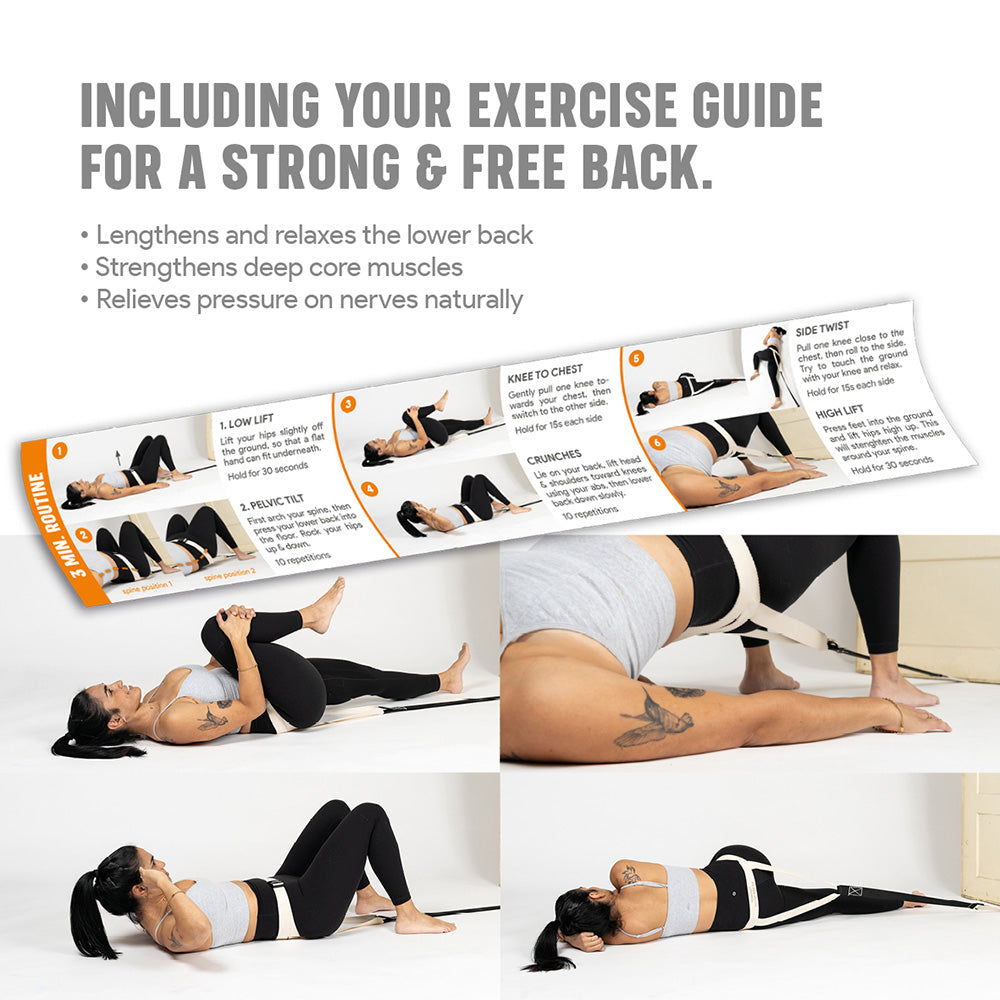
| Single knee to chest | On your back, one knee drawn gently towards the chest; the other leg long on the floor | 15–20 s | 3 per side | One knee, not both: hugging both rounds the lumbar spine |
| Prone press-up (extension) | On your front, hands under the shoulders; press the chest up, hips on the floor; lower slowly | 2–3 s at the top | 8–10 | Only if it eases or centralises the leg pain; if the leg worsens, stop |
| Cat–Cow | On all fours; round the back gently as you breathe out, hollow it gently as you breathe in | no hold | 8–10 slow | Small range, no forcing |
| Figure-4 (piriformis), lying | On your back, knees bent; ankle over the opposite knee; draw the other thigh towards you | 15–20 s | 2–3 per side | Deep pull in the buttock only; stop if it spreads down the leg |
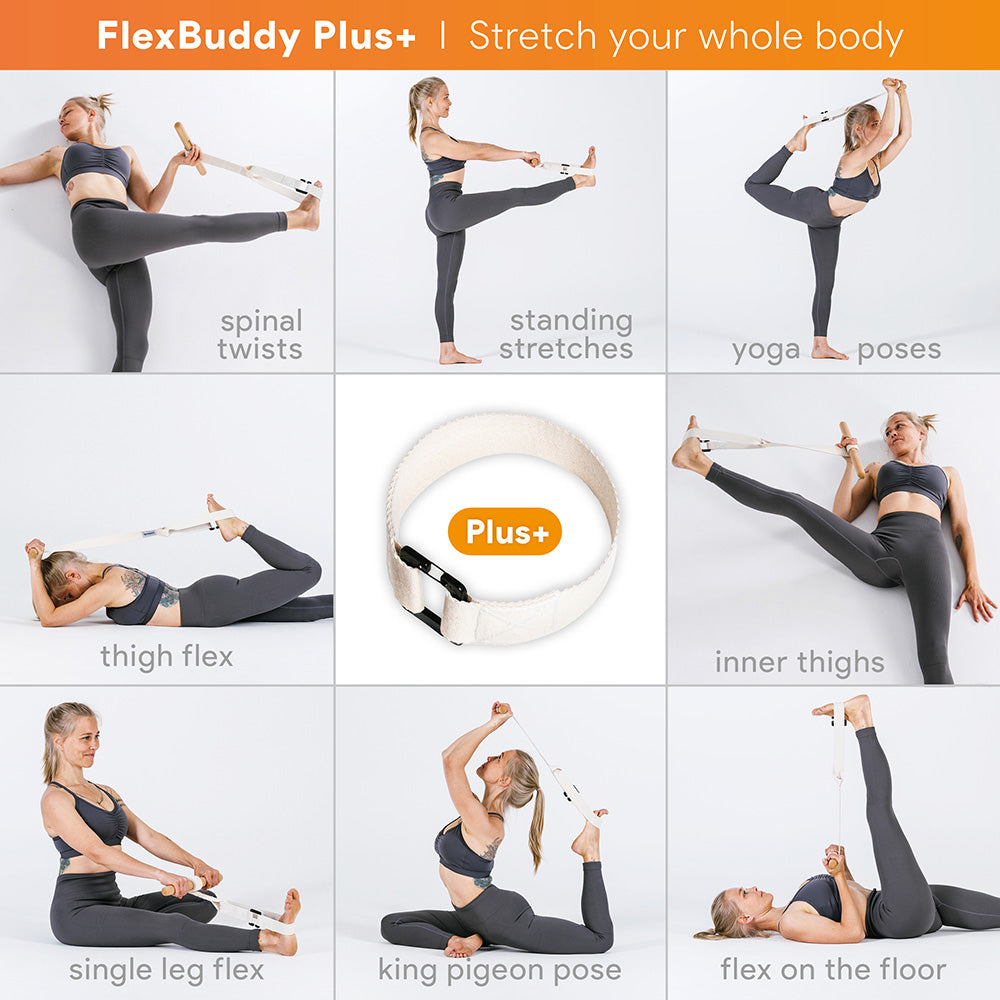
| Gentle hamstring, lying | On your back, other knee bent, strap round one foot; raise the straight leg to a mild thigh pull; back flat; toes relaxed | 15–20 s | 2–3 per side | Keep the foot soft; pulling the toes up tensions the sciatic nerve |
| Seated hamstring, tall spine | Sit tall, legs straight, strap or hands round the feet; tip the pelvis forward, chest lifted, back long | 15–20 s | 2–3 | Rebuilding phase only, once the lying version is easy and the leg has been quiet for weeks |
The piriformis, hamstring and nerve questions overlap with sciatica; our sciatica stretches guide covers the nerve-or-muscle self-tests and the nerve glides, so we have not repeated them here.
What to avoid, and why
Everything here combines lumbar flexion with load or repetition [5][17].
- Standing toe touches and rounded-back forward folds. Standing bent forward more than doubles disc pressure [5], and folding until the back rounds does the same. Stretch the hamstrings lying down with a strap, or seated with a long spine.
- Sit-ups, crunches and double knee-to-chest. Repeated flexion under load is what produced herniations in the laboratory [17]; build trunk strength with exercises that keep the spine still instead.
- Twisting under load, from leveraged seated twists to golf swings. Twisting alone did not cause herniation in the laboratory, but combined with repeated flexion it encouraged damage within the annulus [18].
- Heavy bending early in the morning. Discs are stiffest and most stressed in the first hours after waking [15]. Walk and shower first; leave socks, the dishwasher and the gym until later.
- "Spinal decompression" devices and home traction. The systematic review of conservative care found no advantage for traction, and it was the treatment most associated with adverse events: pain, anxiety, leg weakness and fainting [20].
Long sitting deserves a mention: the NHS lists it among the causes of a slipped disc [1], and slumped sitting raises disc pressure to 0.83 MPa against 0.46 upright [5]. If your job is a chair, our guide to lower back pain from sitting covers the breaks and set-up that help.
Directional preference, and why a physiotherapist matters
If you have read about the McKenzie method, you have met the idea that each back has a direction it prefers. A physiotherapist trained in it asks you to repeat movements, backward, forward, sideways, and watches your leg symptoms; the direction that makes them retreat towards the spine and stay better is your directional preference, and your exercises are built around it. In a multicentre randomised trial of 312 people with back pain with or without sciatica, 74% showed a directional preference; those given matching exercises improved significantly more on every outcome than those given the opposite or non-directional exercises [6]. For most people with a herniation that direction is extension, which is why the prone press-up is on the safe list with a condition attached.
The wider evidence is measured: a 2018 meta-analysis found the McKenzie approach no better than other rehabilitation for acute back pain, and moderately better than exercise alone for disability in chronic back pain [22]. The assessment is the valuable part, and that is the real argument for a physiotherapist: someone who tests your spine's response, checks strength and reflexes so weakness is caught early, and changes the programme as you change. Our review of whether stretching helps back pain sets out what the trials show.
The honest timeline, and when surgery is discussed
Expect improvement over days to weeks, with most people free of symptoms by three to four months [2]. Up to 30% of people with sciatica still have some pain a year on [7], and orthopaedic guidance quotes up to a 20 to 25% lifetime chance of the disc herniating again [2]. Specialists generally consider referral when symptoms have not improved after at least six to eight weeks of conservative care, and immediately for cauda equina syndrome or severe or progressive weakness [7]. The NHS gives two reasons a GP might refer you to discuss surgery: symptoms not improved by other treatments, or worsening muscle weakness or numbness [1].
What surgery buys is speed, not a different destination. In the largest trial, 501 people with imaging-confirmed herniations and at least six weeks of leg symptoms were randomised to discectomy or non-surgical care; both groups improved substantially over two years and the differences were small and not statistically significant, partly because so many switched groups [23]. Analysed by the treatment actually received, the surgery group improved more at four years, while the proportion back at work was similar, 84% against 78% [24]; a review of five trials agreed [25]. After surgery, exercise still matters: a Cochrane review of 22 trials found that programmes starting four to six weeks after disc surgery reduced pain and disability faster than no treatment, home programmes did as well as supervised ones, and none increased the chance of a second operation [26].
Doing this with FlexBuddy, once cleared
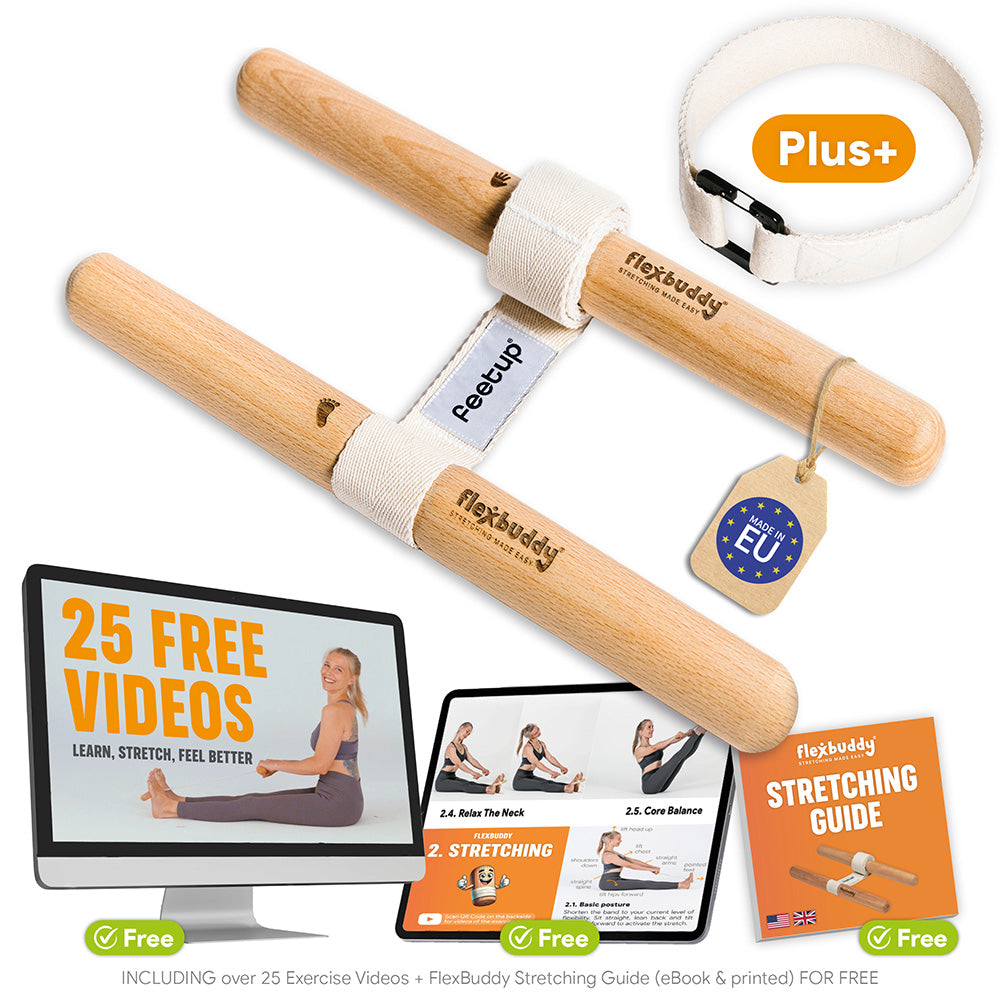
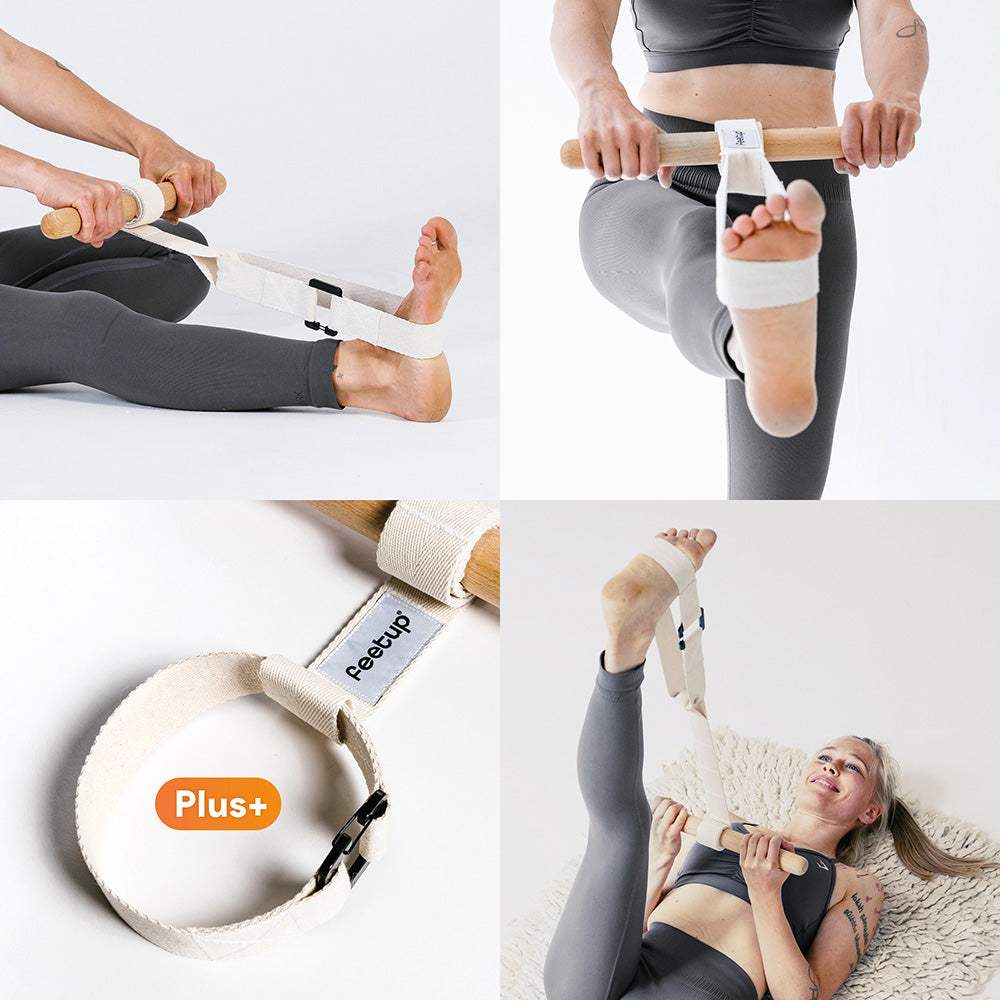
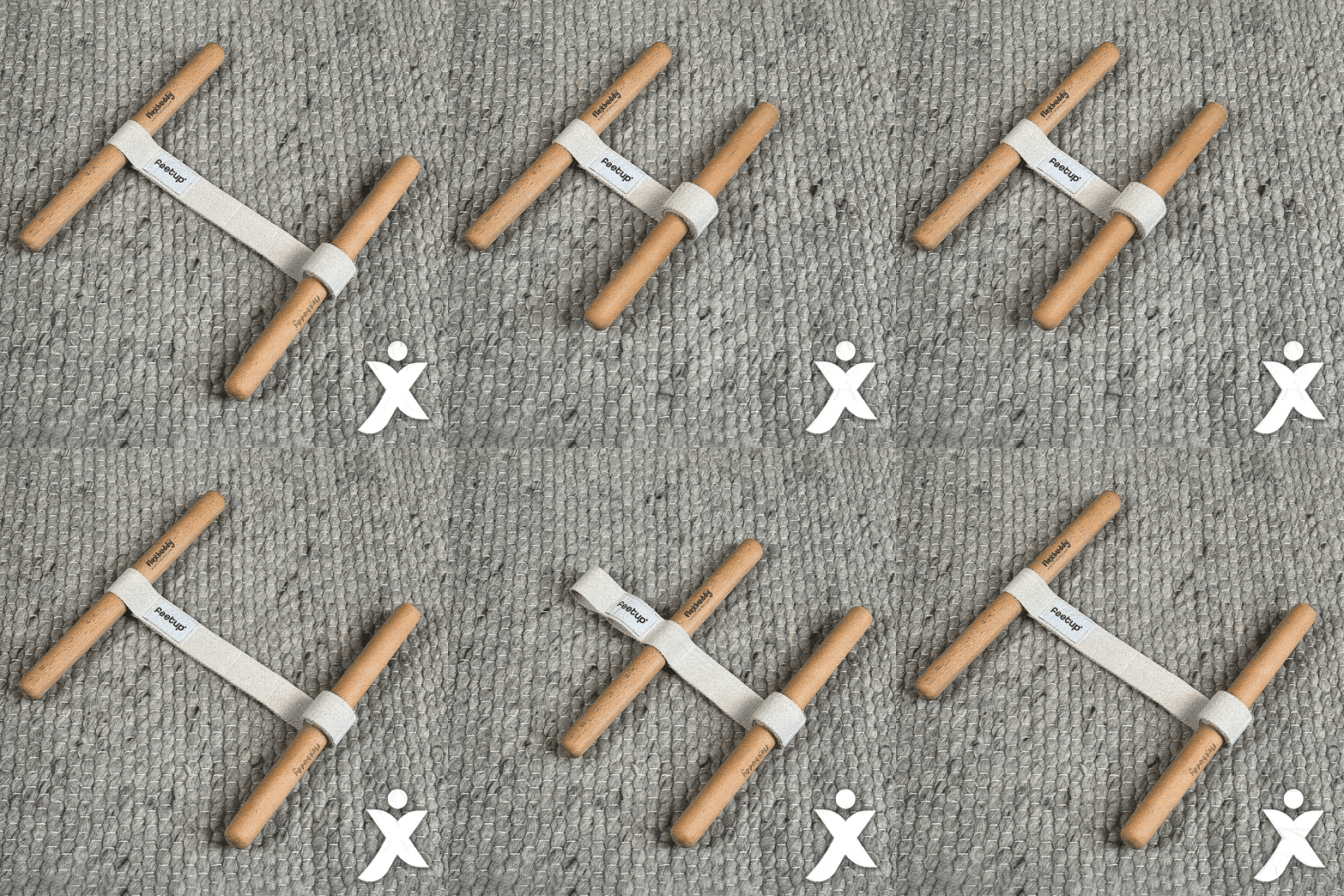
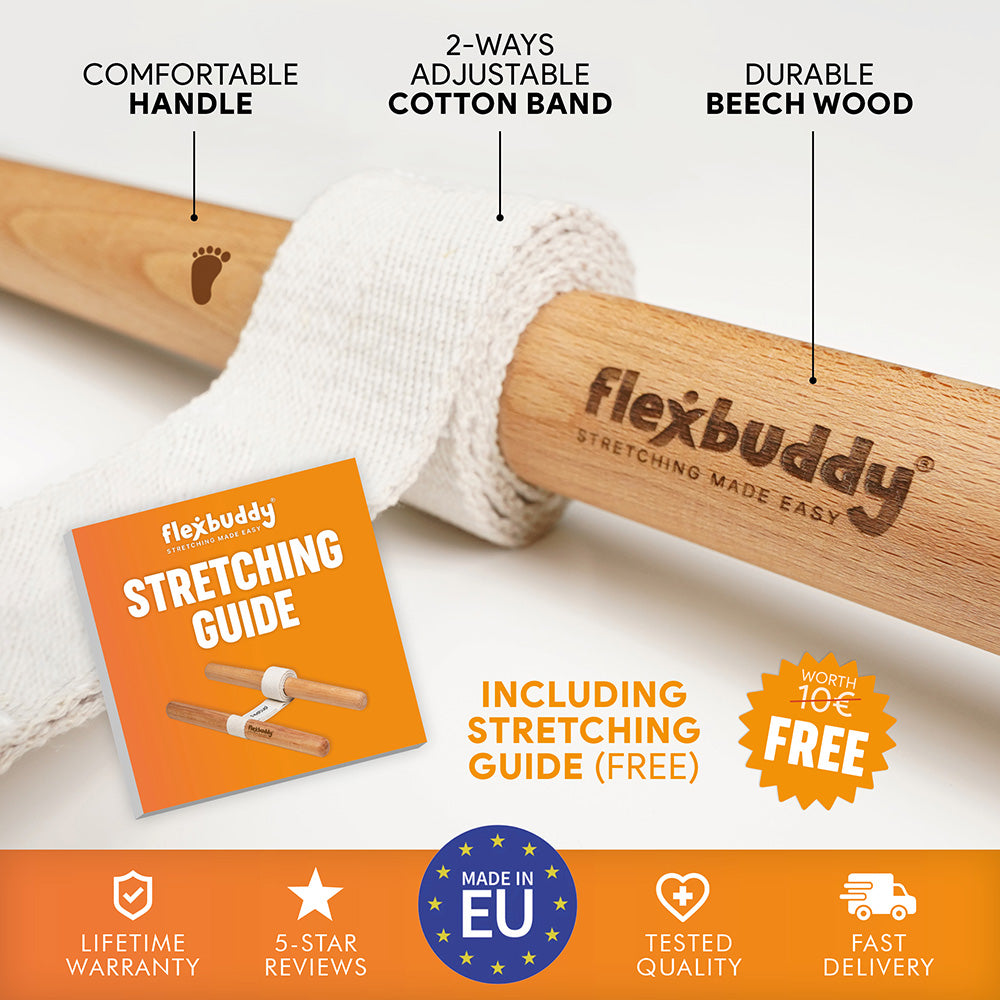
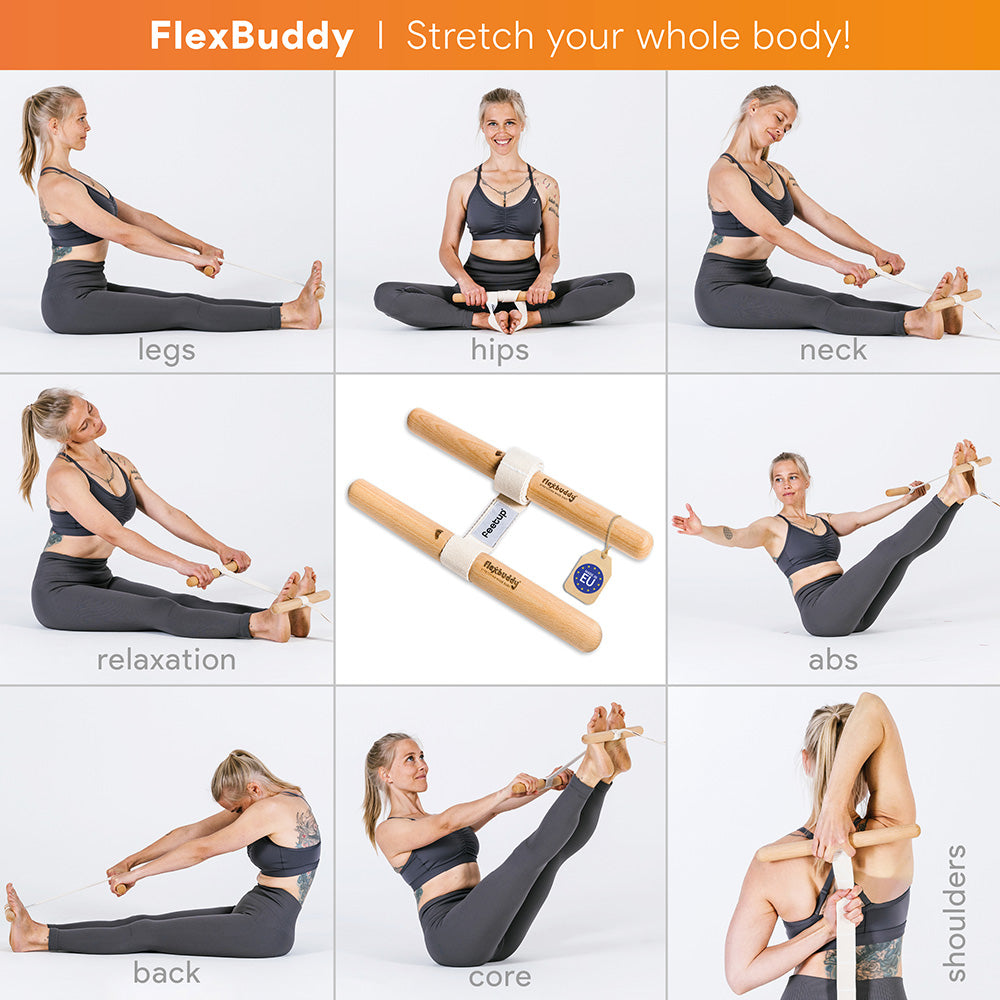
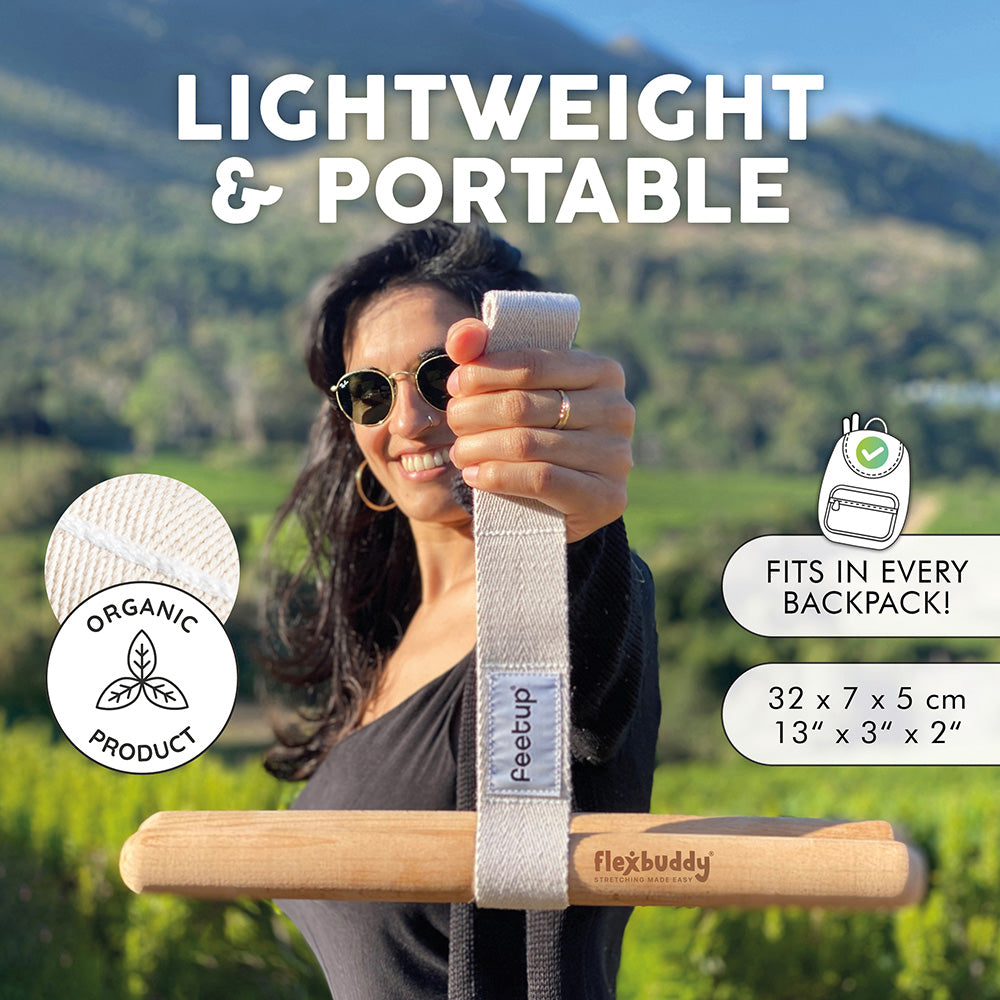
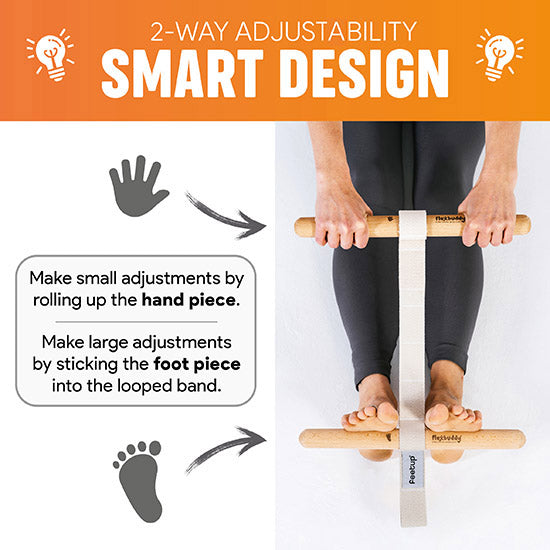
FlexBuddy® is a stretching device, not a treatment for a herniated disc, and it has no place in the acute phase. Its job starts in the rebuilding weeks, when a physiotherapist or doctor has cleared you for hamstring stretching and the leg has been quiet. The problem it solves is the one this article keeps returning to: stretching the hamstrings without rounding the lower back. Two beech-wood bars joined by an adjustable cotton strap; the foot bar under the soles, the hand bar in your hands, and you sit tall, lean back and tip the pelvis forward so the pull lands in the thighs while the spine stays long. Start with the strap at its longest loop, keep the feet soft rather than flexed, hold for ten slow breaths at mild tension and breathe throughout. If anything travels down the leg, tingles or lingers, loosen a loop or put it away for the day and tell your physio. One trainer calls it "a great tool to help your clients maintain a neutral spine while stretching calves, hamstrings and lower back". Lifetime warranty, 30-day money-back guarantee. See FlexBuddy, or take the two-minute quiz.
Frequently asked questions
Can I stretch with a herniated disc?
Usually yes, once the emergency signs are ruled out. The NHS advice is that gentle exercise speeds recovery and the type does not matter as long as it does not cause pain or make the back pain worse [1]. Keep the lower back long and stop any stretch that sends symptoms down the leg.
What exercises should I avoid with a herniated disc?
Loaded forward bending and repeated flexion: toe touches, rounded-back forward folds, sit-ups, double knee-to-chest, twisting under load, lifting with a round back, and bending in the first hours after waking. Bending forward from standing more than doubles disc pressure; lifting with a rounded back nearly quintuples it [5].
Is stretching good or bad for a herniated disc?
It depends on the stretch. Gentle, unloaded stretching with a long spine helps you stay active, which the evidence supports over bed rest [4]. Stretching that rounds the lower back under load, or tensions an irritated nerve, is bad for it. Neither pushes the disc back or speeds resorption [3].
What are the best stretches for an L4 L5 herniated disc?
The same gentle set as for any lumbar herniation, in the table above. L4/L5 and L5/S1 are simply where most herniations happen [9]; the level does not change the rules, but your directional preference does [6].
How long does a herniated disc take to heal?
Most people improve over days to weeks and are free of symptoms by three to four months [2]; many are much better within six weeks [19]. Up to 30% of people with sciatica still have some pain at a year [7].
Should I stretch my hamstrings with a herniated disc?
Gently, lying down, with a relaxed foot and a flat back, and only once the leg has quietened. In people whose back pain radiated into the leg, supervised hamstring stretching programmes improved straight-leg-raise range in a 2024 meta-analysis [27]. A stretch that tingles or travels down the leg is loading the nerve, not the muscle; our tight hamstrings and lower back pain guide covers the straight-spine technique.
This article is general information, not medical advice, and a herniated disc is a condition where that matters most. Do not stretch if you have numbness around your bottom or genitals, trouble peeing or controlling your bladder or bowels, loss of feeling in a leg, or weakness that is getting worse: these need emergency care. For any diagnosed disc herniation, get a doctor's or physiotherapist's clearance first, follow their programme over anything here, and stop any movement that is sharp, radiates down a leg, brings on numbness, or keeps getting worse.
References
- NHS. Slipped disc. nhs.uk, page last reviewed 24 Apr 2024. https://www.nhs.uk/conditions/slipped-disc/ (accessed 4 Nov 2026).
- American Academy of Orthopaedic Surgeons. Herniated Disk in the Lower Back. OrthoInfo. https://www.orthoinfo.org/en/diseases--conditions/herniated-disk-in-the-lower-back/ (accessed 4 Nov 2026).
- Zhong M, Liu JT, Jiang H, et al. Incidence of spontaneous resorption of lumbar disc herniation: a meta-analysis. Pain Physician. 2017;20(1):E45–E52. PMID 28072796 (abstract accessed 4 Nov 2026).
- Hagen KB, Hilde G, Jamtvedt G, Winnem M. Bed rest for acute low-back pain and sciatica. Cochrane Database Syst Rev. 2004;(4):CD001254. doi:10.1002/14651858.CD001254.pub2. PMID 15495012 (abstract accessed 4 Nov 2026).
- Wilke HJ, Neef P, Caimi M, Hoogland T, Claes LE. New in vivo measurements of pressures in the intervertebral disc in daily life. Spine (Phila Pa 1976). 1999;24(8):755–762. doi:10.1097/00007632-199904150-00005. PMID 10222525 (abstract accessed 4 Nov 2026).
- Long A, Donelson R, Fung T. Does it matter which exercise? A randomized control trial of exercise for low back pain. Spine (Phila Pa 1976). 2004;29(23):2593–2602. doi:10.1097/01.brs.0000146464.23007.2a. PMID 15564907 (abstract accessed 4 Nov 2026).
- Koes BW, van Tulder MW, Peul WC. Diagnosis and treatment of sciatica. BMJ. 2007;334(7607):1313–1317. doi:10.1136/bmj.39223.428495.BE. https://pmc.ncbi.nlm.nih.gov/articles/PMC1895638/ (accessed 4 Nov 2026).
- NHS. Back pain. nhs.uk, page last reviewed 5 Mar 2026. https://www.nhs.uk/conditions/back-pain/ (accessed 4 Nov 2026).
- Härtl R. Lumbar Herniated Disc: What You Should Know. Spine-health (peer-reviewed). https://www.spine-health.com/conditions/herniated-disc/lumbar-herniated-disc (accessed 4 Nov 2026).
- Jordan J, Konstantinou K, O'Dowd J. Herniated lumbar disc. BMJ Clin Evid. 2011;2011:1118. PMID 21711958 / PMC3275148 (abstract accessed 4 Nov 2026).
- Brinjikji W, Luetmer PH, Comstock B, et al. Systematic literature review of imaging features of spinal degeneration in asymptomatic populations. AJNR Am J Neuroradiol. 2015;36(4):811–816. doi:10.3174/ajnr.A4173. PMID 25430861 / PMC4464797 (abstract accessed 4 Nov 2026).
- Chiu CC, Chuang TY, Chang KH, Wu CH, Lin PW, Hsu WY. The probability of spontaneous regression of lumbar herniated disc: a systematic review. Clin Rehabil. 2015;29(2):184–195. doi:10.1177/0269215514540919. PMID 25009200 (abstract accessed 4 Nov 2026).
- Cleveland Clinic. Herniated Disk. Last updated 22 Oct 2024. https://my.clevelandclinic.org/health/diseases/12768-herniated-disk (accessed 4 Nov 2026).
- Nachemson AL, Andersson BJ, Schultz AB. Valsalva maneuver biomechanics: effects on lumbar trunk loads of elevated intraabdominal pressures. Spine (Phila Pa 1976). 1986;11(5):476–479. PMID 3750086 (abstract accessed 4 Nov 2026).
- Adams MA, Dolan P, Hutton WC. Diurnal variations in the stresses on the lumbar spine. Spine (Phila Pa 1976). 1987;12(2):130–137. doi:10.1097/00007632-198703000-00008. PMID 3589804 (abstract accessed 4 Nov 2026).
- Snook SH, Webster BS, McGorry RW, Fogleman MT, McCann KB. The reduction of chronic nonspecific low back pain through the control of early morning lumbar flexion: a randomized controlled trial. Spine (Phila Pa 1976). 1998;23(23):2601–2607. doi:10.1097/00007632-199812010-00015. PMID 9854759 (abstract accessed 4 Nov 2026).
- Callaghan JP, McGill SM. Intervertebral disc herniation: studies on a porcine model exposed to highly repetitive flexion/extension motion with compressive force. Clin Biomech (Bristol). 2001;16(1):28–37. doi:10.1016/s0268-0033(00)00063-2. PMID 11114441 (abstract accessed 4 Nov 2026).
- Marshall LW, McGill SM. The role of axial torque in disc herniation. Clin Biomech (Bristol). 2010;25(1):6–9. doi:10.1016/j.clinbiomech.2009.09.003. PMID 19815318 (abstract accessed 4 Nov 2026).
- Harvard Health Publishing. Herniated Disk. Harvard Medical School, 6 Mar 2026 (reviewed by R. H. Shmerling, MD). https://www.health.harvard.edu/pain/herniated-disk-a-to-z (accessed 4 Nov 2026).
- Hahne AJ, Ford JJ, McMeeken JM. Conservative management of lumbar disc herniation with associated radiculopathy: a systematic review. Spine (Phila Pa 1976). 2010;35(11):E488–E504. doi:10.1097/BRS.0b013e3181cc3f56. PMID 20421859 (abstract accessed 4 Nov 2026).
- Garber CE, Blissmer B, Deschenes MR, et al.; American College of Sports Medicine. Position stand: quantity and quality of exercise for developing and maintaining cardiorespiratory, musculoskeletal, and neuromotor fitness in apparently healthy adults. Med Sci Sports Exerc. 2011;43(7):1334–1359. doi:10.1249/MSS.0b013e318213fefb. PMID 21694556 (abstract accessed 4 Nov 2026).
- Lam OT, Strenger DM, Chan-Fee M, Pham PT, Preuss RA, Robbins SM. Effectiveness of the McKenzie Method of Mechanical Diagnosis and Therapy for treating low back pain: literature review with meta-analysis. J Orthop Sports Phys Ther. 2018;48(6):476–490. doi:10.2519/jospt.2018.7562. PMID 29602304 (abstract accessed 4 Nov 2026).
- Weinstein JN, Tosteson TD, Lurie JD, et al. Surgical vs nonoperative treatment for lumbar disk herniation: the Spine Patient Outcomes Research Trial (SPORT): a randomized trial. JAMA. 2006;296(20):2441–2450. doi:10.1001/jama.296.20.2441. PMID 17119140 / PMC2553805 (abstract accessed 4 Nov 2026).
- Weinstein JN, Lurie JD, Tosteson TD, et al. Surgical versus nonoperative treatment for lumbar disc herniation: four-year results for the Spine Patient Outcomes Research Trial (SPORT). Spine (Phila Pa 1976). 2008;33(25):2789–2800. doi:10.1097/BRS.0b013e31818ed8f4. PMID 19018250 / PMC2756172 (abstract accessed 4 Nov 2026).
- Jacobs WC, van Tulder M, Arts M, et al. Surgery versus conservative management of sciatica due to a lumbar herniated disc: a systematic review. Eur Spine J. 2011;20(4):513–522. doi:10.1007/s00586-010-1603-7. PMID 20949289 / PMC3065612 (abstract accessed 4 Nov 2026).
- Oosterhuis T, Costa LO, Maher CG, de Vet HC, van Tulder MW, Ostelo RW. Rehabilitation after lumbar disc surgery. Cochrane Database Syst Rev. 2014;(3):CD003007. doi:10.1002/14651858.CD003007.pub3. PMID 24627325 / PMC7138272 (abstract accessed 4 Nov 2026).
- Gou Y, Lei H, Chen X, Wang X. The effects of hamstring stretching exercises on pain intensity and function in low back pain patients: a systematic review with meta-analysis of randomized controlled trials. SAGE Open Med. 2024;12:20503121241252251. doi:10.1177/20503121241252251. PMID 39086556 / PMC11289822 (abstract accessed 4 Nov 2026).